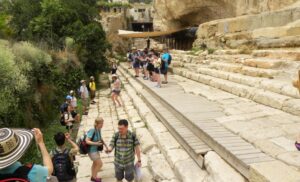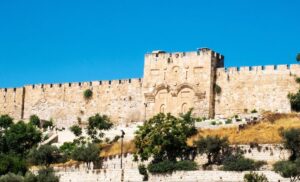
Qasr el Yahud is the traditional site on the Jordan River where Jesus was baptized by John the Baptist. Located on the Israeli side of the river near Jericho, this sacred Christian pilgrimage destination allows visitors to immerse themselves in the same waters where this pivotal biblical event occurred approximately 2,000 years ago.
Qasr el Yahud marks one of the most revered sites in Christian pilgrimage tradition, believed to be the very place where Jesus was baptized by John the Baptist. The site’s name translates from Arabic as “Castle of the Jews,” a reference to the Israelites’ crossing of the Jordan River under Joshua centuries before Christ.
Location
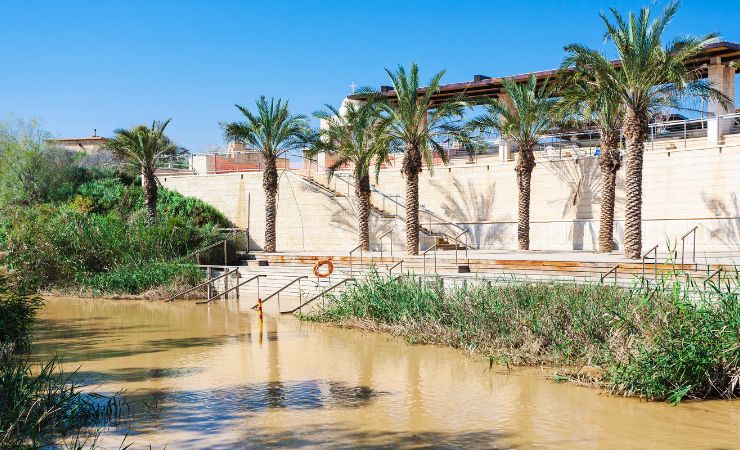
Qasr el Yahud sits in the West Bank along the banks of the Jordan River, roughly 10 kilometers east of Jericho and about a 45-minute drive from Jerusalem. The site sits directly on the Israel-Jordan border, where the river narrows to little more than a few meters wide. On the opposite bank, clearly visible from the Israeli side, is the Jordanian baptismal site of Bethany Beyond the Jordan (Al-Maghtas), a UNESCO World Heritage Site since 2015. Access to Qasr el Yahud is managed by the Israeli Civil Administration, and visitors pass through a checkpoint on arrival. Parking is available on site at no extra charge.
Biblical Context and Old Testament Connection
Long before the first Christian pilgrims arrived at this bend in the Jordan River, the site already carried the weight of some of the most dramatic events in the Hebrew Bible. Three distinct Old Testament stories are associated with these waters, each one layering additional significance onto what visitors experience at Qasr el Yahud.
Joshua and the Crossing into the Promised Land
After wandering the desert for 40 years, the Israelites, led by Joshua, crossed the Jordan River at this very site to enter the Promised Land. According to the Book of Joshua, as soon as the priests carrying the Ark of the Covenant stepped into the river, the waters miraculously parted, allowing the people of Israel to cross on dry ground (Joshua 3:14-17). Twelve stones were taken from the riverbed and set up at Gilgal as a permanent memorial of the crossing. This event marked the definitive end of the wilderness generation and the beginning of Israel’s settlement of Canaan, which is why the Arabic name Qasr el Yahud, “Castle of the Jews,” preserves the memory of that ancient passage.
Elijah and Elisha’s Miraculous Passage
The prophet Elijah, accompanied by his disciple Elisha, also traveled to the Jordan River shortly before he was taken up to heaven. Elijah struck the waters with his cloak, parting the river so they could cross on dry land. Moments later, Elijah was taken up in a fiery chariot, leaving his mantle for Elisha, symbolizing the passing of prophetic leadership (2 Kings 2:7-14). Elisha then struck the same waters with Elijah’s cloak and crossed back, demonstrating that the prophetic spirit had passed to him. The parallel with Joshua’s crossing was deliberate: in both cases, a parted Jordan River signaled a new chapter in Israel’s spiritual history.
The Cleansing of Naaman
Naaman, a commander of the Syrian army who suffered from leprosy, was advised by the prophet Elisha to bathe in the Jordan River to be healed. Initially skeptical, since the rivers of Damascus seemed to him far grander than the muddy Jordan, Naaman finally obeyed, dipping himself seven times into the river, after which he was miraculously healed (2 Kings 5:1-14). His story introduced the idea of the Jordan as a site of physical and spiritual cleansing for people beyond Israel, a theme that runs through Christian history right up to the present-day baptisms performed at Qasr el Yahud.
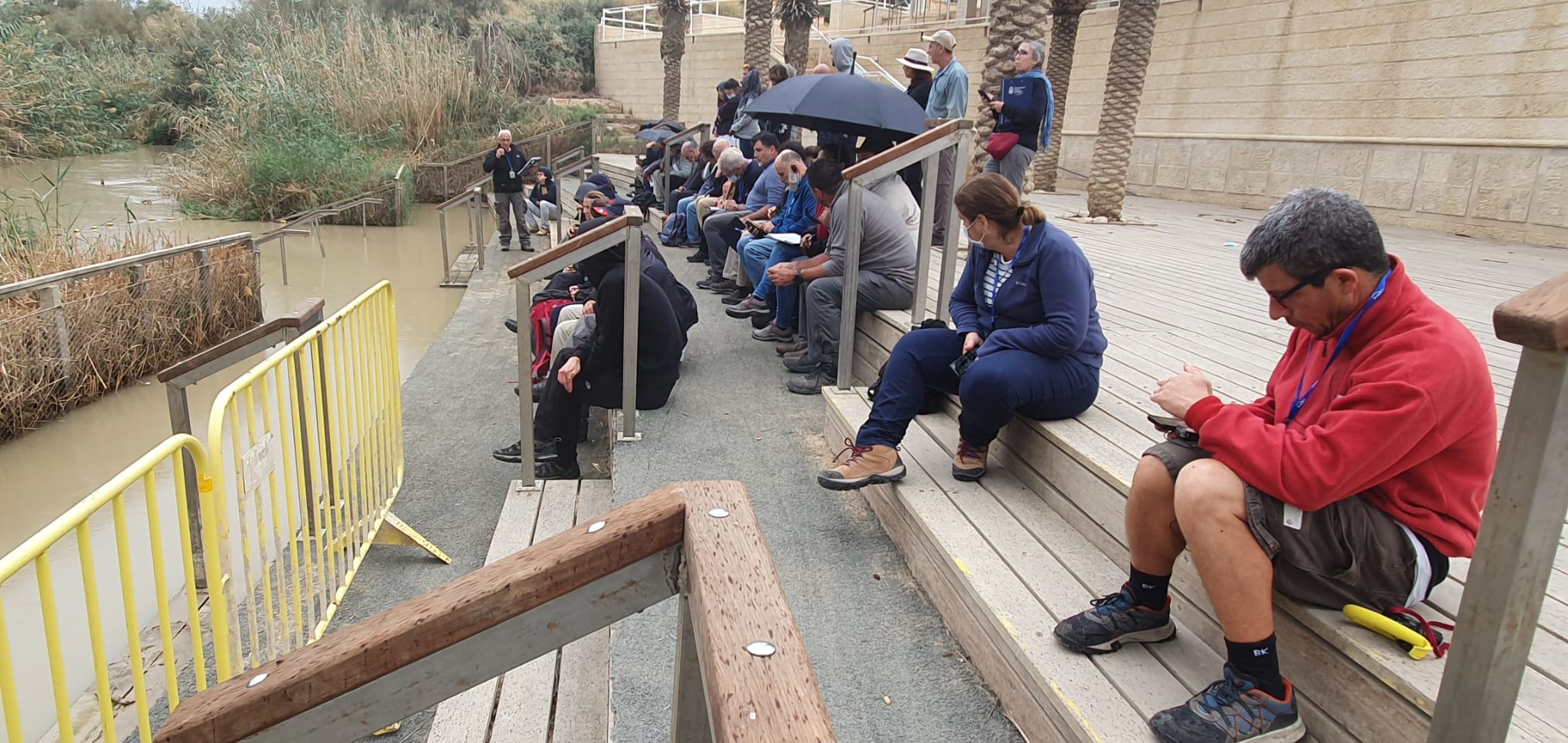
The Baptism of Jesus at Qasr el Yahud
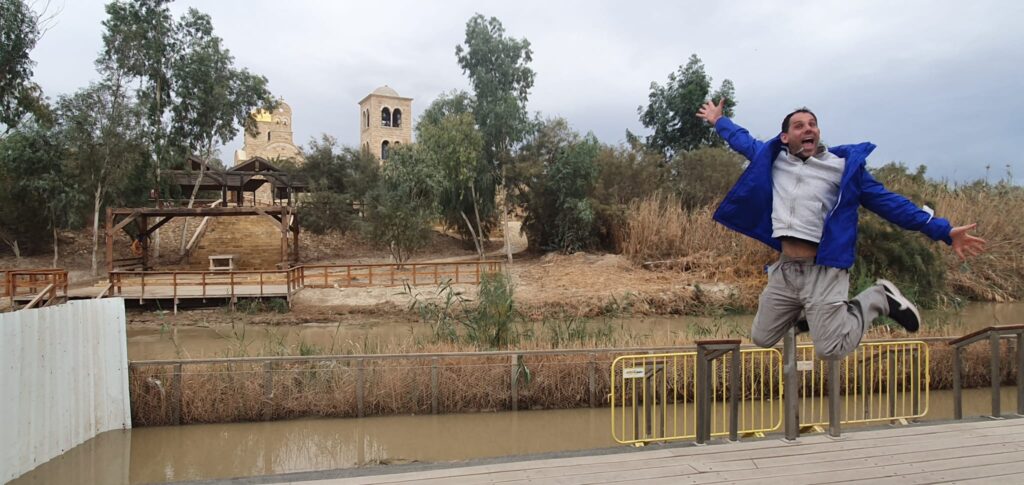
Qasr el Yahud holds a unique place in Christian tradition as the site where Jesus was baptized by John the Baptist, an event that marked the beginning of his public ministry. The baptism is documented across all four Gospels, Matthew, Mark, Luke, and John, making it one of the most widely attested moments in the New Testament. The convergence of those accounts on a single stretch of the lower Jordan River is precisely why this location draws millions of Christian pilgrims over the course of a year.
Biblical Account of the Baptism
According to the Gospel of Matthew (Matthew 3:13-17), Jesus came from Galilee to the Jordan River specifically to be baptized by John. Initially, John was reluctant, telling Jesus, “I need to be baptized by you, and do you come to me?” But Jesus insisted, saying, “Let it be so now; it is proper for us to do this to fulfill all righteousness.” As soon as Jesus was baptized, he came up from the water, and in that moment, the heavens opened. The Spirit of God descended like a dove and alighted upon him, while a voice from heaven declared, “This is my beloved Son, in whom I am well pleased.”
The Significance of Jesus’ Baptism
For Christians, this moment represents a powerful affirmation of Jesus’ identity as the Son of God, with the Holy Trinity, Father, Son, and Holy Spirit, revealed together for the first time. The feast of the Baptism of the Lord is celebrated by Western churches on the Sunday following Epiphany, while Eastern Orthodox churches mark the same event as Theophany on January 19. Both traditions draw directly on the Gospel accounts that point to this stretch of the Jordan River.
Why Qasr el Yahud?
The lower Jordan, near its entry into the Dead Sea, was the focal point of John the Baptist’s ministry. He preached a baptism of repentance in the wilderness, drawing crowds from Jerusalem and Judea who waded into the river as a public act of turning toward God. By choosing to be baptized here, Jesus placed himself within that movement of repentance while, according to the Gospel accounts, simultaneously being declared something far greater. Byzantine-era churches and monasteries built at this site from the 4th century onward confirm that early Christians identified this specific bend of the Jordan as the place where that event occurred. The remains of those structures are still visible in the area today.
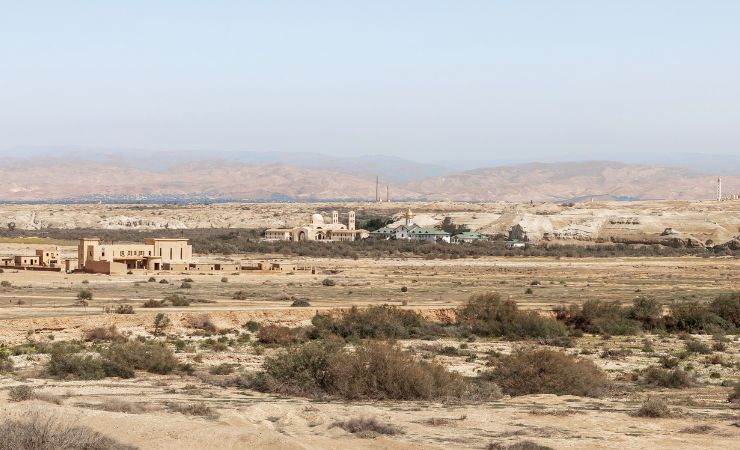
Qasr el Yahud Since 2011
The baptismal area at Qasr el Yahud was opened to the public in 2011 following decades of closure as a military zone, and a substantial restoration program has transformed it into a well-organized pilgrimage destination. The Israeli Ministry of Tourism funded the construction of wooden walkways, shaded pavilions, and facilities that accommodate large groups, including tour buses arriving from Jerusalem and Tel Aviv. Eight church denominations, among them Catholic, Greek Orthodox, Armenian, Coptic, Ethiopian, Romanian, Syrian, and Russian, have also regained access to their historic properties on the grounds, several of which are now undergoing active restoration.
Epiphany Celebrations at Qasr el Yahud
Every January, Qasr el Yahud becomes a focal point of faith and pilgrimage during the Epiphany celebrations, marking the baptism of Jesus by John the Baptist. The site hosts two main events based on the differing liturgical calendars of the Western and Eastern Christian churches. On January 6, Western churches observe Epiphany, with ceremonies that include prayer, hymns, and a solemn procession to the Jordan River. Later, on January 19, the Eastern Orthodox churches celebrate Theophany, a larger event that draws thousands of Orthodox Christians from Russia, Greece, Romania, Ethiopia, and beyond. During these ceremonies, clergy in traditional attire bless the waters of the Jordan, and many pilgrims symbolically immerse themselves in the river. White baptismal gowns are available for purchase or rental near the site entrance, and group baptisms are common throughout both celebration days. The atmosphere during Theophany in particular is extraordinary: the narrow riverbank fills with worshipers singing liturgical chants while priests swing censers over the water.
What to See at Qasr el Yahud
- The Jordan River and the Baptismal Site: This is the central attraction, believed by Christians to be the location where Jesus was baptized by John the Baptist. Pilgrims often wade into its shallow waters for baptismal ceremonies or symbolic acts of renewal. The river also forms the border between Israel and Jordan, with the Jordanian baptismal site of Bethany Beyond the Jordan (Al-Maghtas) visible across the narrow waterway. On busy days the two sites’ pilgrims are close enough to exchange greetings across the water.
- Ruins of Historic Churches and Chapels: The area contains remnants of several churches and chapels dating back to the Byzantine and Crusader periods, reflecting the site’s long history of pilgrimage. The Crusader-era records indicate that as many as 60,000 pilgrims visited in the year 1172 alone, which gives a sense of how important this location was to medieval Christianity.
- St. John the Baptist Greek Orthodox Monastery: Located nearby, this restored monastery features traditional Orthodox artwork, frescoes, and icons dedicated to John the Baptist. It is built on the ruins of earlier Byzantine-era structures and also commemorates the crossing of the Jordan by the Israelites under Joshua.
- The Ethiopian Monastery of the Holy Trinity: Consecrated in 1933 under Empress Menen Asfaw of Ethiopia, this monastery was designed by architects Clifford Holliday and Andoni Baramki. After decades of closure during the military zone period, the Ethiopian Orthodox community has been working to restore access to the property.
- The Franciscan Church of St. John the Baptist: Built in 1935 and partially destroyed by an earthquake in 1956, this church was officially returned to the Custody of the Holy Land in November 2020 after more than 50 years of closure. Restoration work is ongoing, and visitors can view the exterior and surrounding grounds.
- Baptismal Area Facilities: The site is equipped with wooden ramps for easier access to the Jordan River, shaded areas for gatherings and prayer, restrooms, and showers for pilgrims who enter the water. White baptismal robes are available for purchase near the entrance.
- Viewing Platforms: Shaded platforms are available for visitors who prefer to observe the river and the baptismal activities without entering the water.
Practical Information
Opening Hours: Qasr el Yahud is generally open Sunday through Thursday from 8:00 a.m. to 5:00 p.m., and Friday and Saturday from 8:00 a.m. to 4:00 p.m. Hours may be extended during peak pilgrimage seasons and on Epiphany and Theophany. Always confirm current hours with the Israeli Nature and Parks Authority before visiting, as security conditions in the Jordan Valley can affect access.
Accessibility: Wooden ramps and paved pathways connect the parking area to the riverbank, making the site accessible for visitors using wheelchairs or mobility aids. The main baptismal platform extends over the water and is stable and flat.
2026 Update: Opening hours and access arrangements at Qasr el Yahud are subject to change due to ongoing security conditions in the West Bank. Verify current hours and checkpoint requirements directly with the Israeli Nature and Parks Authority or your tour operator before planning your visit.
Admission: Entrance to the baptismal site is free of charge. There is no admission fee to walk the grounds, enter the water, or use the viewing platforms. Parking is also free.
Additional Information
Ancient Times:
- c. 1400 BC: According to tradition, Joshua leads the twelve tribes of Israel across the Jordan River at the location later associated with Qasr el Yahud to enter Canaan after 40 years of wandering in the desert. The waters of the Jordan miraculously part.
- Biblical Era (Old Testament):The Jordan River gains significance through the acts of prophets Elijah and Elisha.
- Elijah and Elisha reportedly cross the Jordan River after Elijah strikes the water with his cloak, causing it to part. Elijah is later taken up to heaven in a fiery chariot from this area, leaving his mantle to Elisha.
- The prophet Elisha instructs Naaman, a commander of the Syrian army suffering from leprosy, to bathe seven times in the Jordan River, after which he is miraculously healed.
Early 1st Century AD:
- c. AD 28-29: The ministry of John the Baptist begins in the wilderness near the Jordan River. He preaches a baptism of repentance for the forgiveness of sins.
- c. AD 28-29 (shortly after John’s ministry begins): Jesus travels from Galilee to the Jordan River to be baptized by John the Baptist.
- The baptism likely takes place at Al-Maghtas (Bethany Beyond the Jordan), near present-day Al-Maghtas, Jordan, or the area now known as Qasr el Yahud on the West Bank.
- According to the Synoptic Gospels, John is initially reluctant to baptize Jesus but agrees at Jesus’ insistence to “fulfill all righteousness.”
- Immediately after Jesus’ baptism, the heavens open, and the Spirit of God descends upon him like a dove. A voice from heaven declares, “This is my beloved Son, in whom I am well pleased.” (Matthew) or “You are my beloved Son, in whom I am well pleased.” (Mark, Luke).
- The Gospel of John does not directly narrate the baptism but records John the Baptist bearing witness to the Spirit descending like a dove upon Jesus.
- The baptism of Jesus is generally considered the start of his public ministry.
- Post-Baptism:The Synoptic Gospels describe the temptation of Jesus, where he withdraws to the Judean desert to fast for forty days and nights.
- The Gospel of John recounts Jesus meeting two of John the Baptist’s disciples who then follow Jesus, marking the beginning of the relationship between Jesus and his future disciples.
Byzantine Period (c. 4th – 7th Centuries AD):
- Churches and monasteries begin to be built at the baptismal site on the Jordan River (Qasr el Yahud area) due to its significance.
Crusader Period (c. 11th – 13th Centuries AD):
- The Qasr el Yahud area flourishes again with thousands of Christian pilgrims visiting to be baptized in the Jordan River. Records indicate as many as 60,000 pilgrims in 1172.
Mamluk Period (c. 13th – 16th Centuries AD):
- Due to fragile security conditions, many churches and monasteries in the Qasr el Yahud area are slowly deserted. Pilgrimage becomes difficult, and pilgrims become afraid to stay overnight.
British Mandate Period (1920 – 1948):
- New churches and monasteries are built in the Qasr el Yahud area.
- Thousands of Christian pilgrims visit the site annually until 1967 to be baptized and take water from the Jordan River.
- 1933: Empress Menen Asfaw of Ethiopia presides over the consecration of the Ethiopian Monastery of the Holy Trinity at Qasr al-Yahud. The architects were Clifford Holliday and Andoni Baramki.
- 1930s: A chapel is built by Franciscan friars near the Jordan River at Qasr al-Yahud.
- 1935: The larger Church of St. John the Baptist (Franciscan) is built at Qasr al-Yahud.
- 1930s: Rare videos record baptismal ceremonies taking place at Qasr al-Yahud.
- 1940s: Excavations near the Church of St. John Ba Harim (Ein Karem, associated with John the Baptist’s birth) reveal graves, chapels, and a Jewish ritual bath from the First Century.
- 1955: The Greek Orthodox Monastery of St. John the Baptist at Qasr al-Yahud is restored.
- December 18, 1956: An earthquake strikes the region, destroying the large Franciscan church at Qasr al-Yahud. Restoration work begins afterwards.
Post-1948:
- 1967 (Six-Day War): The area of Qasr al-Yahud becomes a minefield and a fenced military zone after Israel’s occupation of the West Bank. The Church of St. John the Baptist and other monasteries are closed.
Late 20th Century:
- 1980s: Baptismal ceremonies at Qasr al-Yahud are revived by diverse Christian communities.
- 1990s (after the Israel-Jordan peace agreement): Plans are drawn up to redevelop the Qasr al-Yahud area and allow pilgrims more free access.
21st Century:
- March 2000: Pope John Paul II visits Al-Maghtas on the Jordanian side of the Jordan River, recognizing it as a likely location for Jesus’ baptism.
- 2011: After mine clearance efforts, the Qasr al-Yahud baptismal site is officially restored and opened to the public by Israeli authorities.
- The Israeli Ministry of Tourism invests in renovating and upgrading the Qasr al-Yahud site, including constructing wooden ramps, shaded areas, and facilities.
- The HALO Trust, a British mine clearance organization, works to remove approximately 4000 mines from the Qasr al-Yahud area with the consent of Israeli and Palestinian authorities, allowing eight churches (including Catholic, Greek Orthodox, Armenian, Coptic, Ethiopian, Romanian, Syrian, and Russian) to regain possession of their properties.
- November 2020: The Custody of the Holy Land (Franciscan friars) officially takes possession of the Church of St. John the Baptist at Qasr al-Yahud after its closure in 1967. Plans are made for further recovery and enhancement of the property for pilgrims.
Is Qasr el Yahud safe to visit?
Qasr el Yahud is managed by the Israeli Civil Administration and is considered safe for tourists and pilgrims. Visitors pass through a military checkpoint on the road into the site. Groups should travel with a licensed Israeli tour guide, and all visitors should check current travel advisories before going, as conditions in the West Bank can change. The site itself is well-staffed and receives organized pilgrim groups daily.
Can I be baptized at Qasr el Yahud?
Yes. Baptismal ceremonies are performed at Qasr el Yahud regularly, both by organized church groups and by individual pilgrims accompanied by their pastors or priests. The site provides wooden ramps leading into the Jordan River, showers, and changing facilities. White baptismal robes are available for purchase near the entrance. If you are planning a formal baptism ceremony, coordinate in advance with your church or tour group, as some denominations require pre-registration.
What is the difference between Qasr el Yahud and Bethany Beyond the Jordan?
Both sites claim to be the location of Jesus’ baptism, and they face each other across the Jordan River, which is only a few meters wide at this point. Qasr el Yahud is on the Israeli-administered West Bank side, while Bethany Beyond the Jordan, known in Arabic as Al-Maghtas, is on the Jordanian side and has been a UNESCO World Heritage Site since 2015. Many pilgrims visit both on the same trip by crossing the Allenby Bridge (King Hussein Bridge) border crossing nearby.
What is the best time of year to visit Qasr el Yahud?
The Jordan Valley sits well below sea level and becomes intensely hot in summer, with temperatures frequently exceeding 40 degrees Celsius between June and September. The most comfortable visiting periods are March through May and October through November. January is significant for Christian pilgrims due to the Epiphany and Theophany celebrations, but expect large crowds on those dates. Arriving early in the morning on any visit helps beat both heat and crowds.
What does the name Qasr el Yahud mean?
“Qasr el Yahud” is Arabic for “Castle of the Jews,” a reference to the Israelites’ miraculous crossing of the Jordan River under Joshua as described in the Book of Joshua (Joshua 3:14-17). The name predates the site’s Christian pilgrimage significance and reflects the location’s deep roots in Jewish biblical history, which is why the site carries meaning for Jewish visitors as well as Christian pilgrims.
Are there other biblical sites to visit near Qasr el Yahud?
Several major sites are within a short drive. Qumran, where the Dead Sea Scrolls were discovered, is about 20 minutes south along Route 90. The Ein Gedi Synagogue, with its remarkable 6th-century mosaic floor, is roughly 45 minutes further south. The Dead Sea itself is accessible within 15 to 20 minutes of Qasr el Yahud, making it a natural pairing for a full day in the Jordan Valley. St. George’s Monastery in Wadi Qelt, one of the most dramatic monastery settings in the country, is about 30 minutes northwest near Jericho.
Nearby Sites
- St. George’s Monastery in Wadi Qelt: An ancient cliffside monastery nestled in the rugged Judean Desert, known for its breathtaking architecture and secluded, serene environment.
- The Dead Sea: The Dead Sea offers a one-of-a-kind experience to float in its salty, mineral-rich waters and take in the dramatic desert landscape.
- Qumran: Just a short drive south, Qumran is the site where the Dead Sea Scrolls were discovered. These fascinating texts include some of the oldest known copies of the Hebrew Bible.
- Ein Gedi Synagogue: A 6th-century gem, features a beautifully preserved mosaic floor with Hebrew inscriptions.
Keep reading
Part of our Jordan Valley & Dead Sea Guide →